When you’re teaching, learning, or just navigating academic life, idioms can turn plain conversation into something vivid and memorable. From “hit the books” to “brain‑storming session,” these colorful expressions reflect the realities of classrooms, exams, and study habits. Yet many English learners feel stuck trying to grasp or use them correctly. This guide pinpoints the most common education‑related idioms, explains their meanings, and offers practical ways to incorporate them into everyday talk.
Why Idioms Matter in Academic Talk
Idioms are the seasoning of language. They convey attitudes, urgency, and culture in a few words. In an educational setting, they can help students explain challenges, teachers describe strategies, and parents discuss progress without sounding robotic. Knowing these phrases also boosts listening skills—when classmates or professors drop a familiar idiom, you’ll instantly catch the nuance.
Classic Classroom Idioms and How to Use Them
- Hit the books – to study intensively. “I’ll hit the books this weekend to prep for the midterms.”
- Brainstorm – to generate ideas. “Let’s brainstorm before we draft the essay.”
- Drop a line – to send a quick message. “Drop me a line when you’re ready to discuss the project.”
- Run out of time – to lack enough time. “We ran out of time for the lab report, so we’ll finish it tomorrow.”
- Piece of cake – something easy. “The algebra quiz was a piece of cake.”
- Put your hand up – to ask a question. “If you’re unsure, put your hand up.”
Visualizing Idioms with a Classroom Snapshot
Picture a lively study group where everyone shares idiomatic expressions. Visual cues like this help cement the meanings—seeing “brainstorm” in action, for instance, reminds learners that it’s about idea‑generation, not actual thinking.
Common Mistakes and How to Avoid Them
1. Literal interpretation: Saying “I will hit the books” literally implies smashing a book, which can be confusing. Context is key—pair it with a study plan to signal intent.
2. Overuse in formal writing: Idioms shine in speech, but academic essays should stay formal. Reserve them for casual notes, presentations, or conversational interviews.
3. Mixing cultures: Some idioms are U.S.-centric. If you’re in a different English-speaking country, double‑check whether the phrase is familiar locally (e.g., “study hard” instead of “hit the books”).
Turning Idioms into Teaching Tools
Teachers can weave idioms into lessons to make concepts stick. For example, when explaining the importance of time management, ask students to list idioms that describe deadlines—“by the skin of one’s teeth” or “under the wire.” Then, have them use those expressions in sentences about their own schedules. This dual practice reinforces vocabulary and critical thinking.
Practice: Create Your Own Idiom List
1. Identify a common academic challenge—late assignments, exam anxiety, group projects.
2. Search for idioms that capture that challenge.
3. Write a short dialogue or paragraph using three of those idioms.
Example: “I was feeling like I was under the wire for the deadline, so I called a brainstorm session with my teammates. We managed to finish the report and it turned out to be a piece of cake.”
Wrap‑Up: Speak Like a Student, Think Like a Scholar
Idioms related to education are more than quirky sayings; they’re practical tools that reflect the rhythm of learning life. By mastering a handful of them, you can express frustration, excitement, and strategy with precision. Keep practicing, and soon these phrases will feel as natural as saying “good job” or “I’m stuck.”
When you’re teaching, learning, or just navigating academic life, idioms can turn plain conversation into something vivid and memorable. From “hit the books” to “brain‑storming session,” these colorful expressions reflect the realities of classrooms, exams, and study habits. Yet many English learners feel stuck trying to grasp or use them correctly. This guide pinpoints the most common education‑related idioms, explains their meanings, and offers practical ways to incorporate them into everyday talk.
Why Idioms Matter in Academic Talk
Idioms are the seasoning of language. They convey attitudes, urgency, and culture in a few words. In an educational setting, they can help students explain challenges, teachers describe strategies, and parents discuss progress without sounding robotic. Knowing these phrases also boosts listening skills—when classmates or professors drop a familiar idiom, you’ll instantly catch the nuance.
Classic Classroom Idioms and How to Use Them
- Hit the books – to study intensively. “I’ll hit the books this weekend to prep for the midterms.”
- Brainstorm – to generate ideas. “Let’s brainstorm before we draft the essay.”
- Drop a line – to send a quick message. “Drop me a line when you’re ready to discuss the project.”
- Run out of time – to lack enough time. “We ran out of time for the lab report, so we’ll finish it tomorrow.”
- Piece of cake – something easy. “The algebra quiz was a piece of cake.”
- Put your hand up – to ask a question. “If you’re unsure, put your hand up.”
Visualizing Idioms with a Classroom Snapshot
Picture a lively study group where everyone shares idiomatic expressions. Visual cues like this help cement the meanings—seeing “brainstorm” in action, for instance, reminds learners that it’s about idea‑generation, not actual thinking.
Common Mistakes and How to Avoid Them
1. Literal interpretation: Saying “I will hit the books” literally implies smashing a book, which can be confusing. Context is key—pair it with a study plan to signal intent.
2. Overuse in formal writing: Idioms shine in speech, but academic essays should stay formal. Reserve them for casual notes, presentations, or conversational interviews.
3. Mixing cultures: Some idioms are U.S.-centric. If you’re in a different English-speaking country, double‑check whether the phrase is familiar locally (e.g., “study hard” instead of “hit the books”).
Turning Idioms into Teaching Tools
Teachers can weave idioms into lessons to make concepts stick. For example, when explaining the importance of time management, ask students to list idioms that describe deadlines—“by the skin of one’s teeth” or “under the wire.” Then, have them use those expressions in sentences about their own schedules. This dual practice reinforces vocabulary and critical thinking.
Practice: Create Your Own Idiom List
1. Identify a common academic challenge—late assignments, exam anxiety, group projects.
2. Search for idioms that capture that challenge.
3. Write a short dialogue or paragraph using three of those idioms.
Example: “I was feeling like I was under the wire for the deadline, so I called a brainstorm session with my teammates. We managed to finish the report and it turned out to be a piece of cake.”
Wrap‑Up: Speak Like a Student, Think Like a Scholar
Idioms related to education are more than quirky sayings; they’re practical tools that reflect the rhythm of learning life. By mastering a handful of them, you can express frustration, excitement, and strategy with precision. Keep practicing, and soon these phrases will feel as natural as saying “good job” or “I’m stuck.”
8 Tricky Idioms About Money With Meanings Infographic

8 Tricky Idioms About Money With Meanings Infographic
Idiom 1500 English Idioms From Az With Examples Vacation Cheat Sheet:
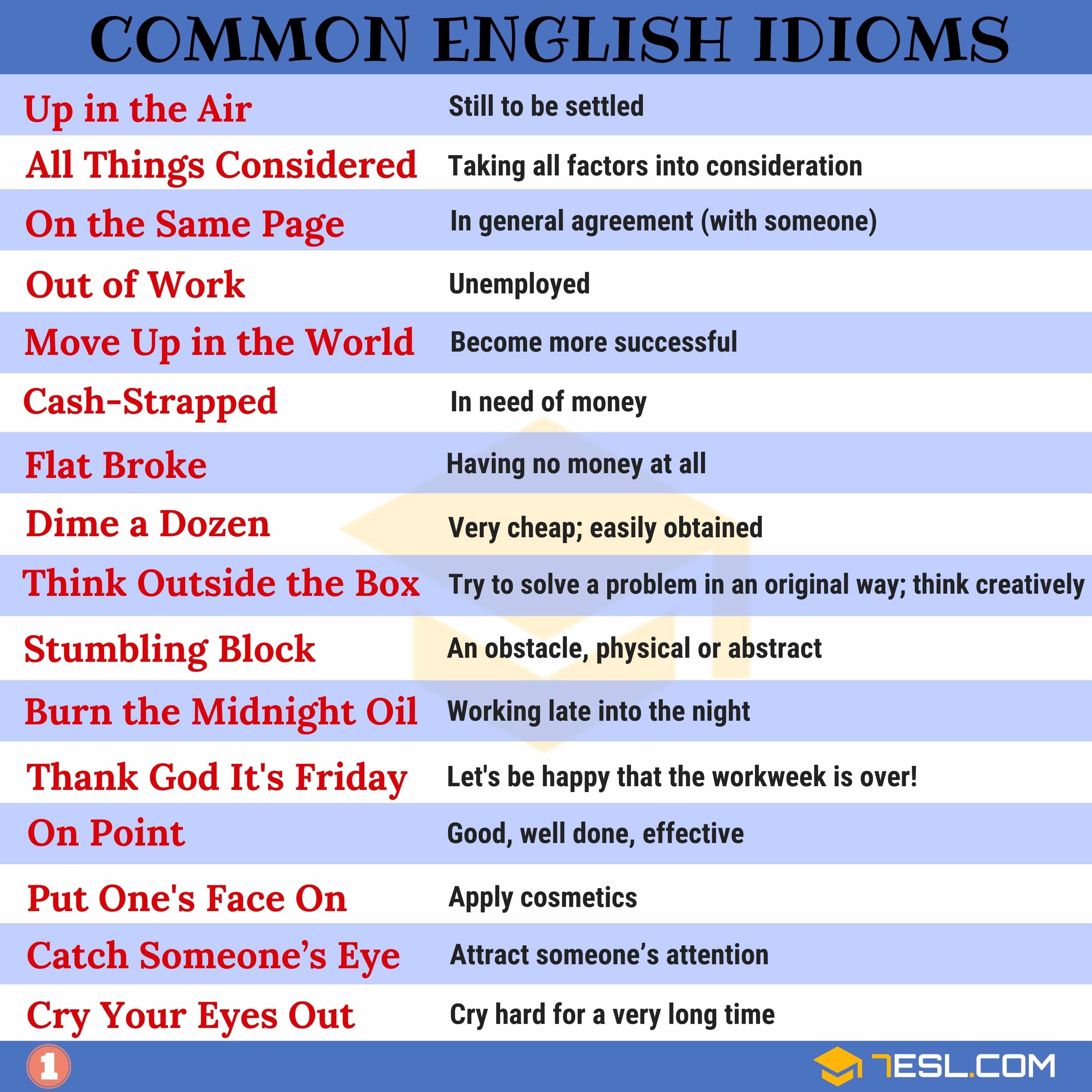
Idiom 1500 English Idioms From Az With Examples Vacation Cheat Sheet:
Burn Bridges Idiom Meaning And Sentence - Infoupdate.org

Burn Bridges Idiom Meaning And Sentence - Infoupdate.org
56 Rare Idioms In English With Meanings And Examples • 7ESL

56 Rare Idioms in English with Meanings and Examples • 7ESL