Learning English can feel like a treasure hunt, especially when you encounter phrases that don’t translate word‑for‑word. Idioms are short, memorable expressions that add color to speech and help you understand native conversations. In this guide, we’ll walk through some easy, everyday idioms that are perfect for elementary students, complete with clear definitions, playful examples, and a handy visual guide.
What Are Idioms and Why Should Kids Use Them?
Idioms are phrases whose meaning isn’t obvious from the individual words. For example, “break a leg” doesn’t mean a literal injury—it’s a wish for good luck. Using idioms can make your English sound more natural, help you grasp cultural references, and boost confidence in everyday conversations.
Step 1: Start with Simple Money Idioms
Money‑related idioms are especially handy because they appear in stories, news, and even school projects. Here’s a quick snapshot of eight common ones.

- Spend a penny – To go to the bathroom (informal).
- Penny for your thoughts – Asking someone what they’re thinking.
- Break the bank – Something that costs a lot.
- In the red – Owing money.
- In the black – Making a profit.
- Cash cow – A source of steady income.
- Money talks – Money can influence decisions.
- Stuck in a financial bind – Facing a tough money problem.
To use these, try saying, “I broke the bank buying that comic book!” or “My savings are in the black now that I finished my summer job.”
Step 2: Explore Everyday “Burning Bridges” Idioms
When we talk about relationships or choices, “burn bridges” is a powerful image. This idiom means to destroy a future opportunity or relationship. It’s common in stories and school discussions about teamwork and decisions.

Example: “If you don’t apologize to your friend, you might burn bridges and lose a best friend.” This visual helps kids remember that actions can have lasting effects.
Step 3: Build a Personal Idiom Dictionary
Creating a small notebook or digital folder with idioms, their meanings, and your own sample sentences keeps learning organized. Here’s a template you can fill out:
- Idiom – e.g., “bite the bullet”
- Meaning – to face a difficult situation bravely.
- Example – “When the math test was tough, I bit the bullet and studied.”
- Personal twist – think of a time you had to do something hard.
Review this list weekly and try to sprinkle one new idiom into a conversation or writing assignment.
Step 4: Practice with Role‑Play Games
Turn idiom learning into a fun activity. Pair up with a classmate or friend and create short dialogues using at least three idioms. For instance:
“You’re a real golden retriever when you help the teacher—always eager to please!”
“Thanks! I just wanted to keep my nose out of other people’s business.”
Use the images above as prompts or visual cues during your game, helping memory retention.
Step 5: Check Your Progress with Quick Quizzes
Test yourself or a friend with a simple multiple‑choice quiz. Pick an idiom, give three possible meanings, and choose the correct one. For example:
Which meaning fits “spill the beans”?
1. To share a secret
2. To cook a pot of soup
3. To throw a party
Correct answer: 1. This quick check reinforces understanding and keeps the learning process engaging.
Conclusion: Idioms as Everyday Conversation Tools
Integrating idioms into your language toolkit makes speaking and writing feel more authentic. Start with the money idioms and “burn bridges” examples, build a personal dictionary, and practice through games and quizzes. Soon, you’ll notice that you’re not just learning words—you’re mastering the playful spirit of English.
Learning English can feel like a treasure hunt, especially when you encounter phrases that don’t translate word‑for‑word. Idioms are short, memorable expressions that add color to speech and help you understand native conversations. In this guide, we’ll walk through some easy, everyday idioms that are perfect for elementary students, complete with clear definitions, playful examples, and a handy visual guide.
What Are Idioms and Why Should Kids Use Them?
Idioms are phrases whose meaning isn’t obvious from the individual words. For example, “break a leg” doesn’t mean a literal injury—it’s a wish for good luck. Using idioms can make your English sound more natural, help you grasp cultural references, and boost confidence in everyday conversations.
Step 1: Start with Simple Money Idioms
Money‑related idioms are especially handy because they appear in stories, news, and even school projects. Here’s a quick snapshot of eight common ones.
- Spend a penny – To go to the bathroom (informal).
- Penny for your thoughts – Asking someone what they’re thinking.
- Break the bank – Something that costs a lot.
- In the red – Owing money.
- In the black – Making a profit.
- Cash cow – A source of steady income.
- Money talks – Money can influence decisions.
- Stuck in a financial bind – Facing a tough money problem.
To use these, try saying, “I broke the bank buying that comic book!” or “My savings are in the black now that I finished my summer job.”
Step 2: Explore Everyday “Burning Bridges” Idioms
When we talk about relationships or choices, “burn bridges” is a powerful image. This idiom means to destroy a future opportunity or relationship. It’s common in stories and school discussions about teamwork and decisions.
Example: “If you don’t apologize to your friend, you might burn bridges and lose a best friend.” This visual helps kids remember that actions can have lasting effects.
Step 3: Build a Personal Idiom Dictionary
Creating a small notebook or digital folder with idioms, their meanings, and your own sample sentences keeps learning organized. Here’s a template you can fill out:
- Idiom – e.g., “bite the bullet”
- Meaning – to face a difficult situation bravely.
- Example – “When the math test was tough, I bit the bullet and studied.”
- Personal twist – think of a time you had to do something hard.
Review this list weekly and try to sprinkle one new idiom into a conversation or writing assignment.
Step 4: Practice with Role‑Play Games
Turn idiom learning into a fun activity. Pair up with a classmate or friend and create short dialogues using at least three idioms. For instance:
“You’re a real golden retriever when you help the teacher—always eager to please!”
“Thanks! I just wanted to keep my nose out of other people’s business.”
Use the images above as prompts or visual cues during your game, helping memory retention.
Step 5: Check Your Progress with Quick Quizzes
Test yourself or a friend with a simple multiple‑choice quiz. Pick an idiom, give three possible meanings, and choose the correct one. For example:
Which meaning fits “spill the beans”?
1. To share a secret
2. To cook a pot of soup
3. To throw a party
Correct answer: 1. This quick check reinforces understanding and keeps the learning process engaging.
Conclusion: Idioms as Everyday Conversation Tools
Integrating idioms into your language toolkit makes speaking and writing feel more authentic. Start with the money idioms and “burn bridges” examples, build a personal dictionary, and practice through games and quizzes. Soon, you’ll notice that you’re not just learning words—you’re mastering the playful spirit of English.
Idioms - ESLBUZZ
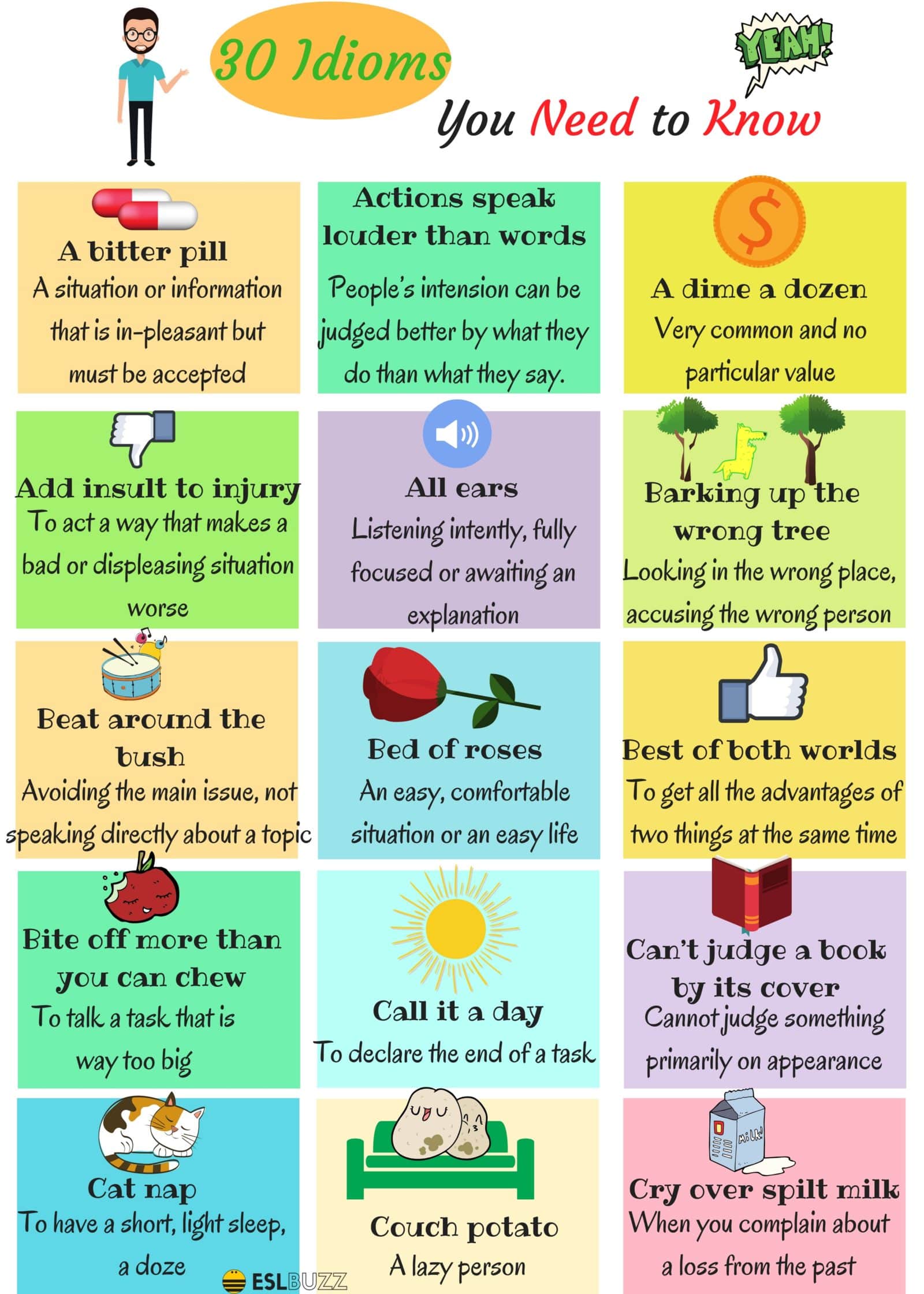
Idioms - ESLBUZZ
56 Rare Idioms In English With Meanings And Examples • 7ESL

56 Rare Idioms in English with Meanings and Examples • 7ESL
Idiom 1500 English Idioms From Az With Examples Vacation Cheat Sheet:
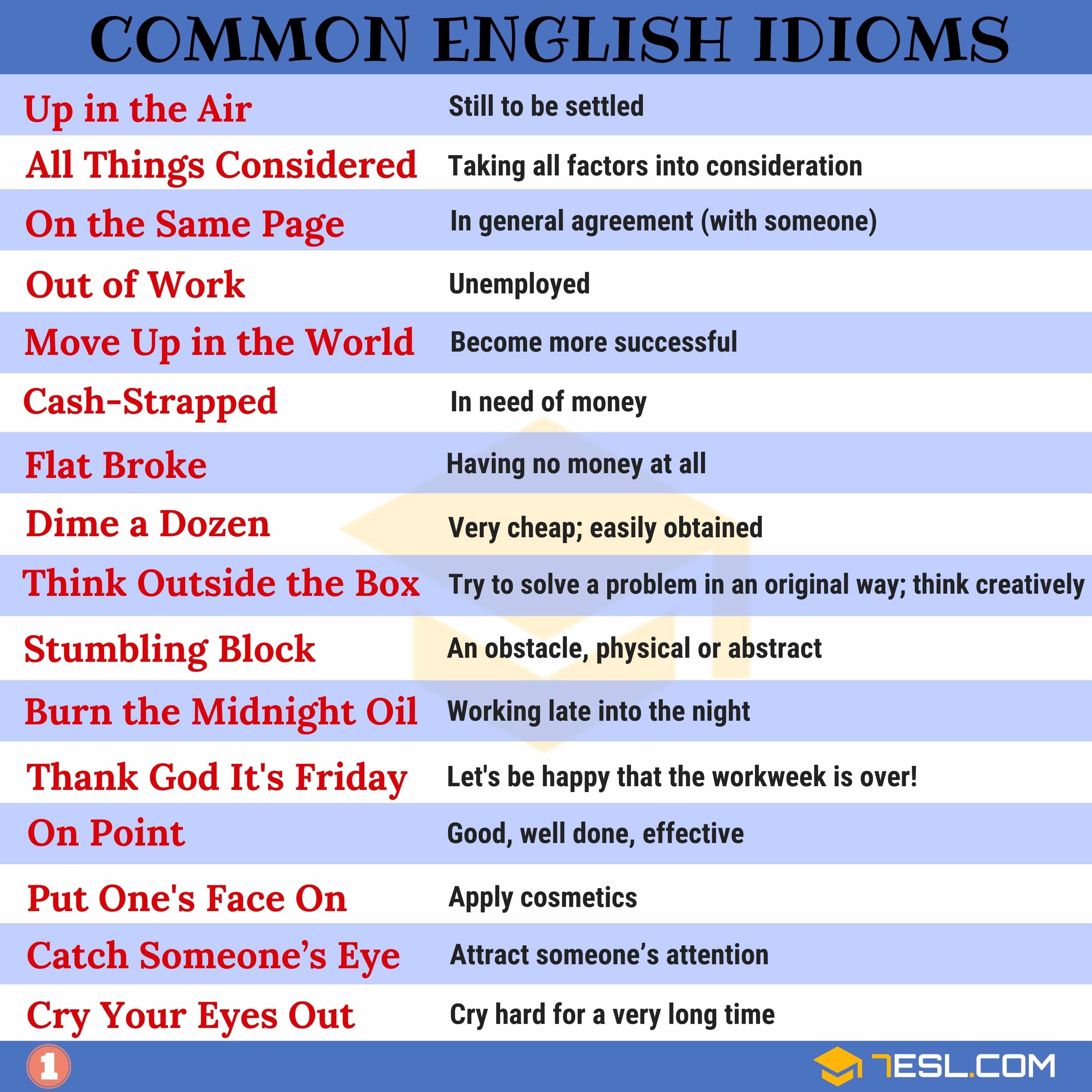
Idiom 1500 English Idioms From Az With Examples Vacation Cheat Sheet: