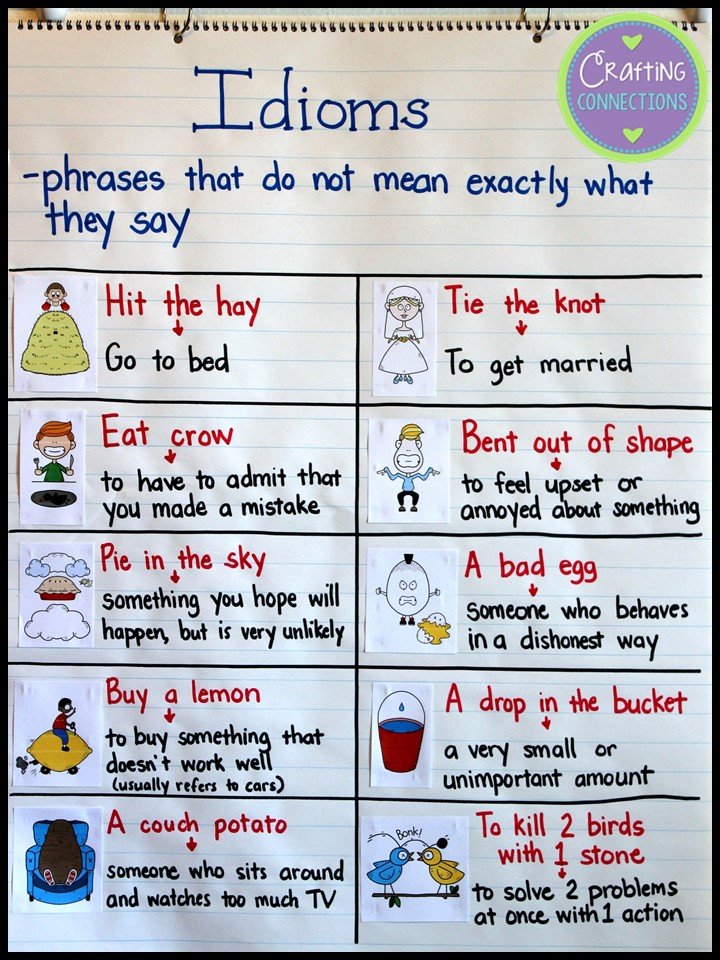
Introducing idioms to young learners presents a unique challenge and opportunity. Phrases like "raining cats and dogs" or "break the ice" can confuse kids who think literally. However, when approached strategically, these expressions become powerful tools for language development and cultural literacy. Below, we explore practical methods for teaching idioms for kids examples, balancing creativity with clarity so children grasp both meaning and usage. [Image: https://i.pinimg.com/736x/32/7f/70/327f70fdc6c04e3854a85c8adb72f617.jpg]
Visual Aids Clarify Idioms Beyond Literal Meanings
Kids struggle with idioms because they defy logic. Visual storytelling bridges this gap. For instance, showing a cartoon character literally buried in a pile of cats and dogs under heavy rain makes the phrase "raining cats and dogs" memorable. Similarly, a comic strip of someone nervously approaching a group to "break the ice" with a joke illustrates the idiomatic role. These tools don’t just simplify—they engage. Teachers can pair idioms for kids examples with drawing exercises, asking children to sketch their interpretations of idioms like "let the cat out of the bag" or "spill the beans." This process turns abstract language into tangible concepts, fostering deeper comprehension.Printable Idiom Lists Foster Independent Learning
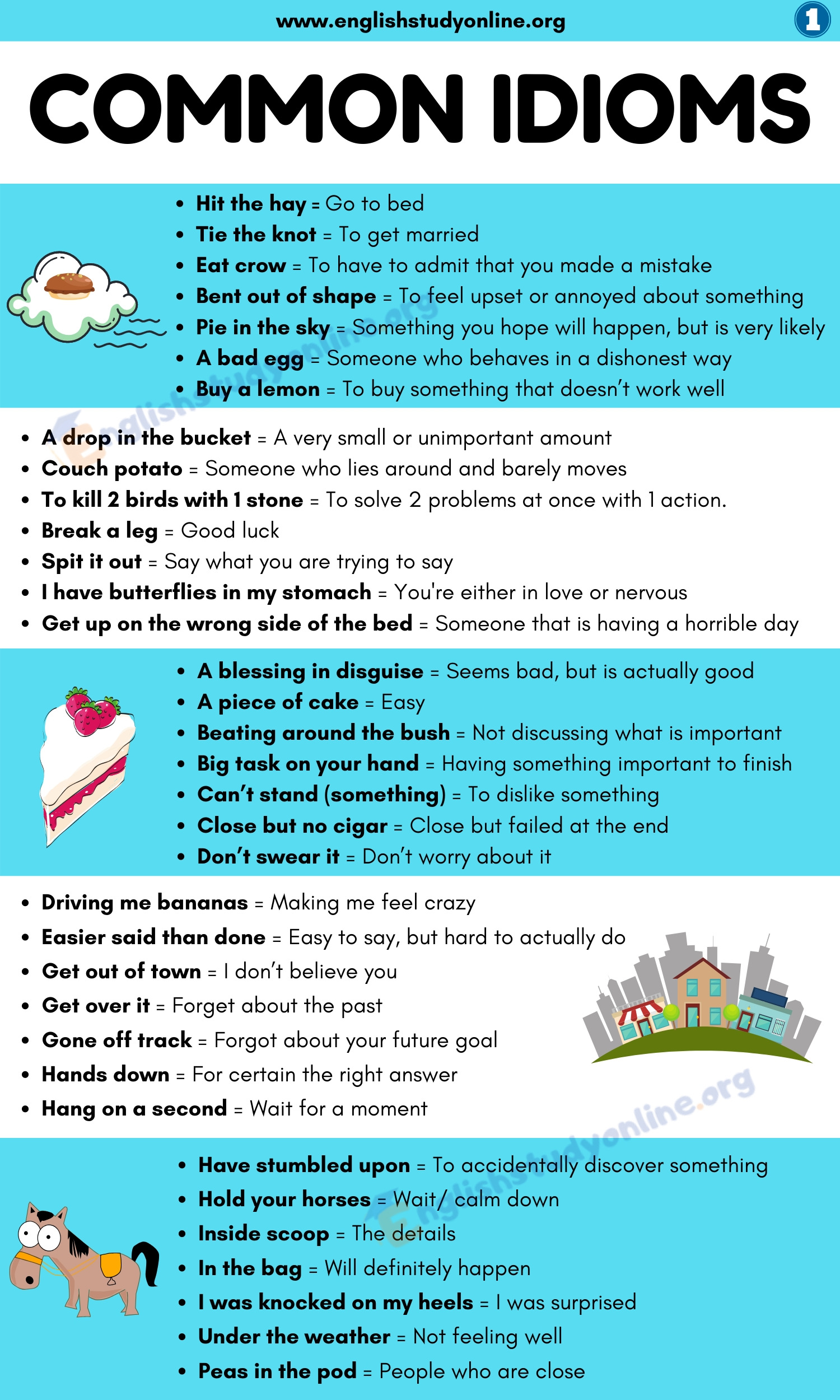
Supplementary resources like printable idiom lists are essential for reinforcing lessons. A well-designed chart (such as the one available at [image: https://englishstudyonline.org/wp-content/uploads/2019/12/Common-Idioms-2.jpg]) can serve as a classroom wall reference or take-home study aid. Break idioms into categories—emotions, actions, or daily situations—to help kids relate them to their lives. For example, pair "under the weather" with a relatable scenario like a child feeling unwell. Encourage learners to add their own drawings or doodles beside each idiom, transforming passive study into active creativity. Printable flashcards with idioms on one side and illustrations on the other further support memory retention during games or revision sessions.Balance Cultural Relevance with Universal Language
Not all idioms transfer seamlessly across cultures. While idioms for kids examples might include "the whole nine yards" in American English, they may need adaptation for global classrooms. Teachers should prioritize idioms tied to shared experiences, such as "when pigs fly" (expressing impossibility) or "a penny for your thoughts" (inquiring about feelings). Discuss why certain idioms lose meaning in translation, teaching cultural sensitivity alongside language skills. This approach avoids overwhelming kids with niche references while grounding lessons in universal contexts they can grasp.Moving From Memorization to Meaningful Use
Rote memorization rarely sticks. Instead, embed idioms into role-play scenarios. For instance, act out a situation where a friend is nervous about giving a speech (prompting "butterflies in the stomach") or organize a pretend store transaction where "piece of cake" describes a simple task. These exercises require children to apply idioms naturally, reinforcing their practical utility. Over time, they’ll internalize phrases without seeing them as foreign language puzzles.Anticipating Challenges and Progressing Gradually
Expect initial confusion. Young learners may mix idioms with literal translations, so patience and repetition are key. Start with high-frequency idioms like "bird brain" (meaning someone is silly) or "hit the hay" (going to bed) before tackling more abstract expressions. Track progress through informal assessments, like asking kids to explain their favorite idiom in their own words. Celebrate small wins—when a child uses "break the ice" correctly in a skit, the payoff is significant.Final Thoughts: Making Idioms Stick for Young Learners
Teaching idioms for kids examples requires blending creativity, patience, and context. By leveraging visual aids, printable resources, and interactive activities, educators help children decode playful language without sacrificing clarity. Gradually introducing idioms tied to everyday experiences ensures learners see their relevance. With consistent practice and adaptation, idioms evolve from confusing phrases to vivid tools for self-expression. [Image: https://englishstudyonline.org/wp-content/uploads/2019/12/Common-Idioms-2.jpg]Introducing idioms to young learners presents a unique challenge and opportunity. Phrases like "raining cats and dogs" or "break the ice" can confuse kids who think literally. However, when approached strategically, these expressions become powerful tools for language development and cultural literacy. Below, we explore practical methods for teaching idioms for kids examples, balancing creativity with clarity so children grasp both meaning and usage. [Image: https://i.pinimg.com/736x/32/7f/70/327f70fdc6c04e3854a85c8adb72f617.jpg]
Visual Aids Clarify Idioms Beyond Literal Meanings
Kids struggle with idioms because they defy logic. Visual storytelling bridges this gap. For instance, showing a cartoon character literally buried in a pile of cats and dogs under heavy rain makes the phrase "raining cats and dogs" memorable. Similarly, a comic strip of someone nervously approaching a group to "break the ice" with a joke illustrates the idiomatic role. These tools don’t just simplify—they engage. Teachers can pair idioms for kids examples with drawing exercises, asking children to sketch their interpretations of idioms like "let the cat out of the bag" or "spill the beans." This process turns abstract language into tangible concepts, fostering deeper comprehension.Printable Idiom Lists Foster Independent Learning
Supplementary resources like printable idiom lists are essential for reinforcing lessons. A well-designed chart (such as the one available at [image: https://englishstudyonline.org/wp-content/uploads/2019/12/Common-Idioms-2.jpg]) can serve as a classroom wall reference or take-home study aid. Break idioms into categories—emotions, actions, or daily situations—to help kids relate them to their lives. For example, pair "under the weather" with a relatable scenario like a child feeling unwell. Encourage learners to add their own drawings or doodles beside each idiom, transforming passive study into active creativity. Printable flashcards with idioms on one side and illustrations on the other further support memory retention during games or revision sessions.Balance Cultural Relevance with Universal Language
Not all idioms transfer seamlessly across cultures. While idioms for kids examples might include "the whole nine yards" in American English, they may need adaptation for global classrooms. Teachers should prioritize idioms tied to shared experiences, such as "when pigs fly" (expressing impossibility) or "a penny for your thoughts" (inquiring about feelings). Discuss why certain idioms lose meaning in translation, teaching cultural sensitivity alongside language skills. This approach avoids overwhelming kids with niche references while grounding lessons in universal contexts they can grasp.Moving From Memorization to Meaningful Use
Rote memorization rarely sticks. Instead, embed idioms into role-play scenarios. For instance, act out a situation where a friend is nervous about giving a speech (prompting "butterflies in the stomach") or organize a pretend store transaction where "piece of cake" describes a simple task. These exercises require children to apply idioms naturally, reinforcing their practical utility. Over time, they’ll internalize phrases without seeing them as foreign language puzzles.Anticipating Challenges and Progressing Gradually
Expect initial confusion. Young learners may mix idioms with literal translations, so patience and repetition are key. Start with high-frequency idioms like "bird brain" (meaning someone is silly) or "hit the hay" (going to bed) before tackling more abstract expressions. Track progress through informal assessments, like asking kids to explain their favorite idiom in their own words. Celebrate small wins—when a child uses "break the ice" correctly in a skit, the payoff is significant.Final Thoughts: Making Idioms Stick for Young Learners
Teaching idioms for kids examples requires blending creativity, patience, and context. By leveraging visual aids, printable resources, and interactive activities, educators help children decode playful language without sacrificing clarity. Gradually introducing idioms tied to everyday experiences ensures learners see their relevance. With consistent practice and adaptation, idioms evolve from confusing phrases to vivid tools for self-expression. [Image: https://englishstudyonline.org/wp-content/uploads/2019/12/Common-Idioms-2.jpg]Kid Friendly Idioms
Kid Friendly Idioms
Common Idioms For Kids

Common Idioms For Kids
List Of Idioms For Kids Pdf
List Of Idioms For Kids Pdf